follow us :
FUJIAN JIASHUN ARTS & CRAFTS CORP., LTD.

search

Leave Your Message

Top Food Container Set Suppliers for Global Buyers

For global buyers, selecting a Food Container Set supplier is not only a price decision. It affects product safety, shipping efficiency, shelf presentation, and repeat orders. A reliable supplier should explain material options, capacity, lid fit, customization, and production lead times clearly. Buyers may compare glass, stainless steel, and food-grade plastics while checking intended use and care instructions. These details shape how a set performs in kitchens, retail aisles, and online orders.

This guide introduces supplier types and practical checks for evaluating them. It looks at manufacturing capability, sample quality, quality-control documentation, packaging, minimum order quantities, and export support. Ask for product specifications and test records relevant to the intended market; requirements can vary by destination and product design. Inspect samples for warped rims, loose seals, sharp edges, and labels that are hard to read. Small defects matter. A supplier’s polished catalog is useful, but it cannot replace clear communication and consistent production evidence. Evidence helps. Buyers should also compare total landed cost, not just the quoted unit price, because freight, protective packaging, and tooling may change the budget. No supplier is perfect, and online claims deserve verification. With a structured shortlist and a few direct questions, procurement teams can find partners that fit their quality, volume, and delivery needs without relying on vague promises.
Top Food Container Set Suppliers for Global Buyers

Define Food Container Set Categories, Materials, and Global Buyer Needs

Top Food Container Set Suppliers for Global Buyers

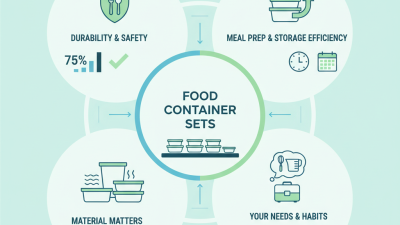
Food container sets usually fall into four groups: meal-prep, household storage, takeaway, and freezer-to-microwave systems. Each group serves a different purchasing brief. Meal-prep buyers value portion sizes and repeated washing. Takeaway buyers prioritize low weight and secure lids. Storage sets need nesting geometry, clear labeling, and efficient shelf use. In procurement reviews, lid fit often causes more complaints than the container body.

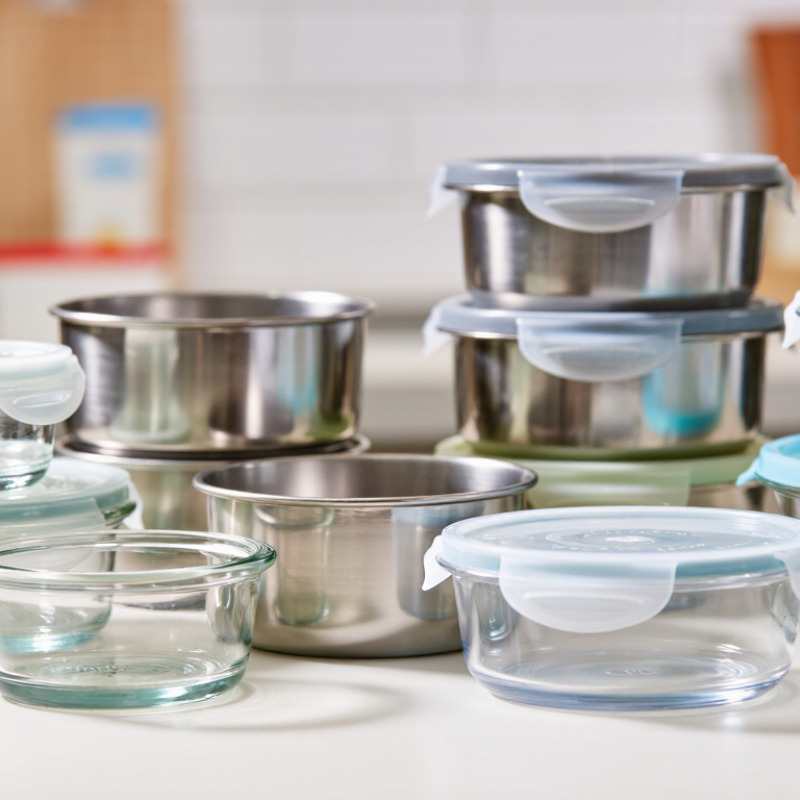
Material selection changes both performance and shipping economics. Polypropylene suits lightweight, microwave-ready sets. High-density polyethylene offers toughness for repeated handling. Glass provides strong stain resistance but increases freight weight and breakage risk. Stainless steel supports long service life, although it cannot enter most microwave ovens. Silicone seals improve leak resistance, but poorly designed seals trap food residue. Small detail, large consequence.

Global buyers also need documented food-contact compliance, temperature limits, migration testing, and traceable production records. The UNEP Food Waste Index Report 2024 estimates 1.05 billion tonnes of food were wasted in 2022. Durable containers cannot solve waste alone, but they can reduce leakage, crushing, and portion damage. Grand View Research identifies convenience and reusable packaging as major food-packaging growth drivers. Buyers should still question broad sustainability claims. Recycled content, refillable design, and actual washing durability are not the same thing.

A supplier with clear test reports, stable quality control, and realistic lead times is usually safer than the cheapest quotation.
Compare Glass, Stainless Steel, PP, and Silicone for Different Uses

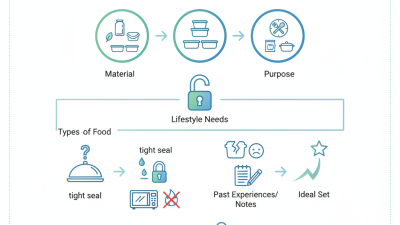
For global buyers, food container suppliers should be compared by use, not material alone. Glass offers strong odor resistance and clear product visibility. It suits meal prep, sauces, and retail presentation, but shipping weight and breakage increase costs. Stainless steel is durable and light enough for daily transport. It works well for lunch boxes and dry foods, but it is usually unsuitable for microwave heating. Polypropylene, or PP, reduces freight weight and supports affordable volume purchasing. It can suit freezer and microwave applications when the supplier provides verified temperature limits. Silicone is flexible and space-saving. It works well for collapsible storage and sealing parts, although odor retention and tearing require inspection.

Material choice also affects sustainability claims. The United Nations Environment Programme reported in Turning off the Tap (2023) that global plastic pollution could fall by 80% by 2040 through system-wide changes. That figure does not make every reusable product sustainable. Product lifespan, transport distance, cleaning habits, and recycling access matter. A common sourcing mistake is trusting material names without testing food-contact performance. U.S. FDA Food Code guidance emphasizes cleanability, durability, and safe food-contact surfaces. Suppliers should provide migration reports, temperature data, leak tests, and batch traceability.

Tips: Request samples before ordering. Test glass under transport vibration. Check PP lids after repeated heating. Press silicone seals around corners. Ask for independent laboratory documentation, not only catalog claims. No material wins every test.

Top Food Container Set Suppliers for Global Buyers - Compare Glass, Stainless Steel, PP, and Silicone for Different Uses

Comparison Dimension Glass Stainless Steel Polypropylene (PP) Food-Grade Silicone
Typical Set Formats Storage bowls, meal-prep containers, jars, and containers with separate lids. Lunch boxes, nesting food tubs, canisters, and insulated containers. Stackable storage boxes, meal-prep sets, takeaway-style containers, and reusable lunch boxes. Collapsible bowls, flexible food pouches, baking and freezer containers, and lids or seals.
Key Advantages Nonporous surface; does not readily retain food odors or stains; contents are easy to see. Durable, lightweight relative to many glass containers, and resistant to breakage in ordinary handling. Lightweight, generally economical, and available in a wide range of shapes and colors. Flexible and collapsible; useful where compact storage and a flexible seal are priorities.
Main Limitations Heavier and more breakable than plastic or metal; rapid temperature changes can cause breakage. Opaque and not suitable for microwave use; quality and corrosion resistance depend on the alloy and construction. May scratch, stain, or retain odors over time; heat tolerance varies by product and use conditions. Flexible walls provide less rigid protection; temperature and performance limits vary by silicone formulation and design.
Heating and Cooling Oven, microwave, freezer, and dishwasher suitability depends on the glass type, lid, and product instructions. Avoid sudden temperature changes. Not microwave-safe. Refrigeration and freezer use are commonly suitable when the container is designed for them. Use in a microwave or dishwasher only when the finished product is specifically marked for that use; follow its temperature limits. Some products are designed for oven, microwave, freezer, or dishwasher use. Confirm the stated limits for the complete product.
Good-Fit Applications Visible refrigerator storage, serving, and reheating when the product is rated for the intended appliance. Commuting, packed lunches, dry goods, and situations where resistance to impact is useful. Everyday meal prep, lightweight lunch sets, and cost-conscious household storage. Space-saving storage, flexible pouches, freezer portions, and products needing pliable seals.
Lid and Seal Considerations Glass bodies are often paired with plastic or silicone lids; check lid material and appliance compatibility separately. Check the gasket material and lid fit. Metal-bodied containers are not automatically leakproof. Inspect lid fit, hinge design, and seal performance; verify whether lids can be used in heating appliances. Check closure strength and seal design, especially for liquid foods and transport; flexible material alone does not guarantee leak resistance.
Buyer Quality Checks Specify glass type, wall thickness, edge finish, lid material, and any thermal-use instructions. Request the declared steel grade and material documentation; inspect seams, edges, finish, and gasket fit. Confirm the resin identification and intended-use instructions; review food-contact documentation and lid durability. Confirm the silicone grade, finished-product food-contact documentation, odor and surface checks, and stated temperature range.
Compliance and Documentation Request food-contact documentation for the glass and every component that touches food, including lids and seals. Request food-contact documentation for the specified alloy and all food-contact components; requirements depend on the destination market. Request documentation for the exact resin, colorants, and finished product for each target market. Request documentation for the exact formulation and finished product for each target market; do not rely on a generic material claim alone.
Sourcing Priorities Balance visibility and surface hygiene against shipping weight, protective packaging, and breakage risk. Compare alloy specification, fabrication quality, lid system, weight, and corrosion-resistance requirements. Compare resin specification, wall strength, closure consistency, color options, and product-specific heat-use claims. Compare formulation consistency, shape retention, closure design, odor control, and documented use limits.

Buyer note: Performance depends on the finished product, material grade, lid or seal, and care instructions. Verify food-contact requirements and appliance-use claims for the destination market and the exact product before purchasing.

Check Food-Contact Compliance: EU 10/2011 Caps Overall Migration at 10 mg/dm²

Top Food Container Set Suppliers for Global Buyers

Check Food-Contact Compliance: EU 10/2011 Caps Overall Migration at 10 mg/dm²

For global buyers, food-contact compliance should begin before price negotiations. Regulation (EU) No 10/2011 sets an overall migration limit of 10 mg/dm² for many plastic food-contact materials. This limit measures the total amount of substances that may migrate into food simulants. It does not replace specific migration limits or other safety requirements.

Ask suppliers for a current Declaration of Compliance. It should identify the material, intended food types, contact time, temperature, and test conditions. A container used for hot soup needs different evidence from one used for chilled fruit. Request laboratory reports linked to the exact product, not only a resin certificate. Testing from an ISO/IEC 17025-accredited laboratory adds useful credibility.

Inspect the lid, seal, pigment, and printed areas separately. Migration can vary between components. Repeated-use containers also need evidence for their stated service life. Small details matter, such as microwave heating, oily foods, and dishwasher cycles. A supplier may pass one test and still provide incomplete documentation. That gap is easy to miss. Buyers should review batch traceability and production changes, too. In practice, compliance files are sometimes copied forward without checking the latest formulation. That deserves careful questioning, and perhaps another test.

Assess Supplier Systems Against ISO 22000:2018 and Traceability Needs

Top Food Container Set Suppliers for Global Buyers

Supplier systems deserve closer scrutiny than polished catalogs. WHO estimates that unsafe food causes 600 million illnesses and 420,000 deaths annually. That figure makes traceability a purchasing issue, not paperwork. The ISO Survey 2021 recorded over 45,000 ISO 22000 certificates worldwide. Certification helps, but it does not guarantee strong daily controls.

Ask for the certificate scope, issuing body, expiry date, and covered production sites. ISO 22000:2018 expects hazard analysis, communication, documented controls, and traceability. For food containers, records should connect resin or paper batches with additives, molds, operators, production dates, pallets, and shipment documents. Keep the chain visible. A reliable supplier can identify affected lots quickly during a mock recall.

Test the system, not only the documents. Request a sample lot record, calibration evidence, laboratory results, and corrective-action reports. Check whether container samples match declared materials and specifications. A spreadsheet may still hide gaps. This is where many reviews remain weak. One missing subcontractor record can break traceability. Supplier audits should also examine complaint handling, retention periods, and change notification. ISO 22000:2018 alignment is valuable, yet buyers should verify how controls work on a busy production day.

Top Food Container Supplier Assessment Framework

Recommended buyer-side weighting for evaluating food container suppliers against ISO 22000:2018 food safety management principles and end-to-end traceability needs. The scoring model focuses on documented systems and verifiable evidence rather than company or brand performance.

Traceability receives a higher weighting because suppliers should be able to identify incoming materials, production lots, finished goods, and shipment destinations. ISO 22000:2018 alignment should be verified through controlled procedures, hazard-control records, corrective actions, internal audits, and management review evidence.

Compare MOQ, Production Capacity, Lead Time, and Landed Cost Across Suppliers

Top Food Container Set Suppliers for Global Buyers

MOQ, production capacity, lead time, and landed cost reveal more than a product catalog. A low MOQ may suit a market test, but it can increase unit pricing and reduce customization options. For regular retail programs, compare monthly output, not only factory claims. Ask for recent production records, shift details, and photos of packed cartons.

Price is rarely simple. Landed cost should include the product, inner packaging, export cartons, freight, insurance, duties, inspection, and payment fees. Request quotations using the same specifications: container size, material, lid design, color, packing method, and delivery term. A supplier offering a lower factory price may become more expensive after ocean freight and port charges. This happens often.

Lead time needs careful checking. Separate sample approval, raw material preparation, production, inspection, and shipment booking. A quoted 25-day production period may exclude weekends, mold adjustments, or holiday closures. Small orders expose weakness. Before placing an order, request a timeline with milestone dates and a written response plan for delays. I have seen buyers focus on MOQ and forget carton capacity, causing damaged lids and unexpected repacking costs. That oversight is easy to repeat. A practical comparison sheet should record confirmed figures, assumptions, and unresolved questions, because supplier promises can change after specifications become detailed.