follow us :
FUJIAN JIASHUN ARTS & CRAFTS CORP., LTD.

search

Leave Your Message

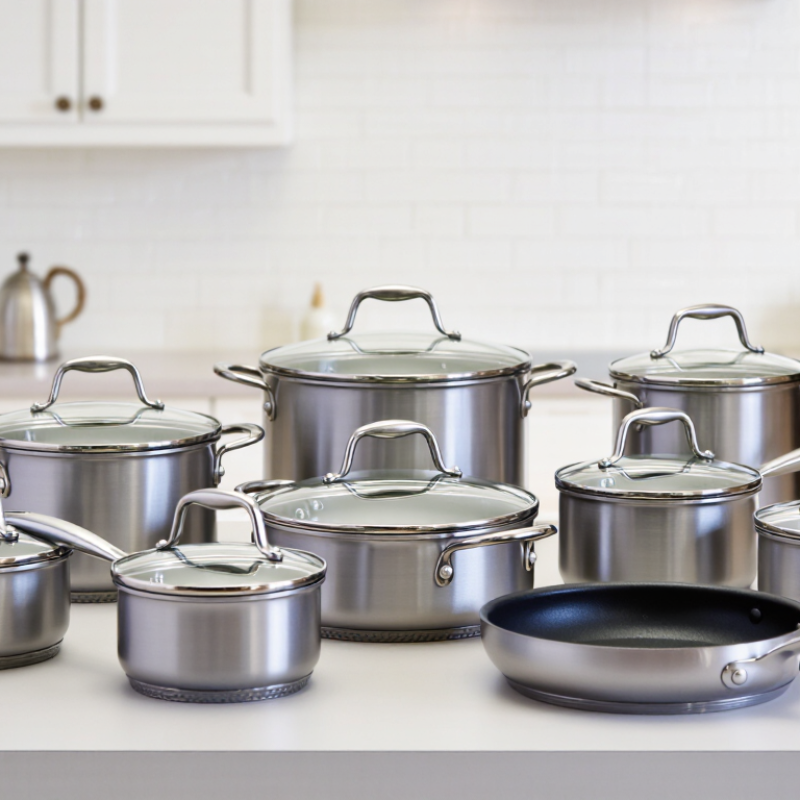
China Top 10 Cooking Pot Set Manufacturers?

China has become a major manufacturing base for cookware, serving domestic brands and global buyers. This position reflects deep metalworking expertise, extensive supply chains, and flexible production capacity.

Industry reports support this broader picture. Grand View Research identifies rising demand for durable, energy-efficient cookware as a key market trend. Mordor Intelligence also links cookware growth with induction compatibility, healthier cooking preferences, and replacement demand. Statista’s consumer-market data suggests that kitchenware remains closely connected to household spending and changing home-cooking habits. These reports measure different markets, so their figures should not be compared mechanically. That limitation matters.

This guide examines China’s top 10 Cooking Pot Set manufacturers through practical purchasing criteria. These include material consistency, base construction, handle strength, coating performance, safety documentation, production capacity, and export experience. A reliable supplier should explain whether its pots use stainless steel, aluminum, or layered construction. It should also provide measurable details, such as wall thickness, heat-distribution design, induction testing, and food-contact compliance.

Small details reveal manufacturing discipline. A loose rivet, uneven rim, or scratched interior can become a costly complaint. Factory audits, sample testing, and batch inspections remain essential. No ranking is perfect. Supplier capabilities can change, and online information may be incomplete. Therefore, this overview should support further verification, not replace it. Buyers should compare certifications, factory records, customer references, and actual samples before signing a contract. The strongest manufacturers combine scale with traceability, consistent quality, responsive communication, and realistic delivery commitments.
China Top 10 Cooking Pot Set Manufacturers?

What Defines a Leading Cooking Pot Set Manufacturer in China

What Defines a Leading Cooking Pot Set Manufacturer in China

A leading cooking pot set manufacturer offers more than attractive shapes and low prices. Grand View Research valued the global cookware market at about USD 19 billion in 2023, with growth expected through 2030. This expansion increases pressure on Chinese factories to prove consistency, not merely production volume.

Experienced manufacturers control steel or aluminum batches, document supplier sources, and test wall thickness before forming. A reliable pot should heat evenly, sit flat, and keep its lid stable during daily use. Small details matter.

Quality appears in the factory process. Inspectors should check handle strength, weld points, coating adhesion, and thermal performance. Food-contact materials must meet the destination market’s requirements, supported by traceable test reports.

ISO 9001 certification can indicate a documented quality system, but it does not guarantee every shipment is perfect. That distinction is often overlooked. Buyers should request pre-production samples, inspection records, and corrective-action reports. Factory visits also reveal practical habits, such as clean assembly tables and separated material storage.

Production capacity is useful, but responsiveness defines long-term value. Mordor Intelligence’s cookware market analysis highlights demand for durable, efficient, and multifunctional cookware.

A capable manufacturer can adjust pot sizes, induction bases, packaging, and labeling without losing control of quality. It should communicate clearly when a design has weak points.

No factory is flawless. The stronger partner measures defects, investigates returns, and improves tooling instead of hiding problems. That evidence builds trust.

China’s Top 10 Cooking Pot Set Manufacturers

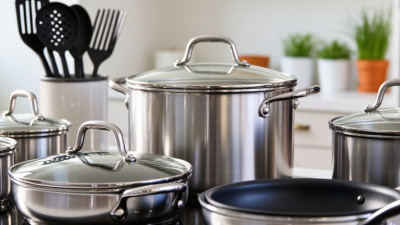
China’s Top 10 Cooking Pot Set Manufacturers are often compared by material control, production experience, and export reliability. A serious review should examine stainless steel grades, aluminum thickness, coating safety, and handle strength. Factory visits can reveal more than attractive catalogs. Check welding lines, polishing areas, and packing stations. Small details matter.

The leading ten suppliers usually support different needs, including induction cookware, ceramic-coated sets, hotel cookware, and household collections. Ask for food-contact test reports, material certificates, and batch traceability before placing an order. Request samples with glass lids, riveted handles, and balanced bases. Test them on several heat sources. A pot that performs well once may still fail after repeated washing.

Pricing alone can mislead buyers. Some manufacturers offer flexible colors and packaging, while others provide stronger quality control and stable monthly capacity. Review production records, inspection procedures, and replacement policies. I would also check whether the supplier explains defects honestly. No ranking stays permanent. A factory may improve quickly, or lose consistency during a busy season. That uncertainty deserves attention.

China Top 10 Cooking Pot Set Manufacturers

Rank Anonymous Manufacturer Profile Primary Product Focus Main Material Typical Construction Common Diameter Range Typical Set Size OEM/ODM Support Common Compliance Areas Typical Export Markets
1 Manufacturer Profile A Stainless-steel cookware sets 201/304 stainless steel Impact-bonded base 16–32 cm 5–12 pieces Yes Food-contact testing; ISO-based quality systems North America, Europe, Australia
2 Manufacturer Profile B Aluminum non-stick cookware sets Cast or forged aluminum Sprayed non-stick coating 18–30 cm 7–14 pieces Yes Coating migration and abrasion testing Europe, Middle East, South America
3 Manufacturer Profile C Tri-ply stainless-steel cookware 304 stainless steel and aluminum Three-layer bonded body 16–28 cm 5–10 pieces Yes Food-contact documentation; dimensional inspection United States, Canada, Western Europe
4 Manufacturer Profile D Induction-compatible cookware Stainless steel and aluminum Encapsulated magnetic base 16–32 cm 6–12 pieces Yes Induction compatibility; handle and lid testing Europe, Southeast Asia, North America
5 Manufacturer Profile E Hard-anodized aluminum sets Hard-anodized aluminum Forged body with non-stick interior 18–30 cm 7–12 pieces Yes Coating performance; food-contact safety South America, Africa, Middle East
6 Manufacturer Profile F Enamel and carbon-steel cookware Carbon steel and vitreous enamel Pressed steel with enamel coating 18–32 cm 4–10 pieces Yes Enamel adhesion; thermal-shock testing Europe, Central Asia, Latin America
7 Manufacturer Profile G Granite-look non-stick sets Die-cast aluminum Multi-layer sprayed coating 18–28 cm 5–11 pieces Yes Abrasion, adhesion, and migration testing Southeast Asia, Europe, Africa
8 Manufacturer Profile H Commercial and household stockpot sets Stainless steel Heavy-gauge welded construction 20–40 cm 3–8 pieces Yes Weld strength; load and heat-resistance testing Hotels, restaurants, distributors worldwide
9 Manufacturer Profile I Compact cookware and nesting sets Aluminum and stainless steel Stackable multi-piece design 14–26 cm 6–15 pieces Yes Packaging drop tests; food-contact testing Outdoor, e-commerce, and retail channels
10 Manufacturer Profile J Entry-level household cookware sets Aluminum or stainless steel Pressed or stamped construction 16–28 cm 5–12 pieces Yes Basic dimensional and food-contact inspection Africa, South Asia, Middle East
Note: Manufacturer identities are intentionally anonymized. Product specifications, market coverage, certifications, and customization capabilities should be verified directly through current factory documentation, samples, and third-party inspection before purchasing.

Key Product Categories and Manufacturing Capabilities

China Top 10 Cooking Pot Set Manufacturers?

China’s leading cooking pot set manufacturers usually cover several product categories. Common sets include saucepans, stockpots, sauté pans, woks, and Dutch ovens. Stainless steel remains important for commercial durability and induction compatibility. Aluminum supports lighter designs and faster heat response. Cast iron serves slow cooking and heat retention. Ceramic-coated options target consumers seeking easier cleaning.

According to Grand View Research, the global cookware market was valued at approximately USD 19.2 billion in 2023. Its forecast indicates steady growth through 2030. This demand encourages Chinese factories to combine stamping, deep drawing, forging, and die casting. Advanced facilities also produce multi-layer bases, induction discs, tempered glass lids, and riveted handles. Some manufacturers use automated polishing lines. Others still depend heavily on manual inspection.

Coating capability deserves careful attention. Factories may offer PTFE, ceramic, or uncoated stainless steel surfaces, with thickness and adhesion testing available. The International Aluminium Institute reports that recycled aluminum can require about 95% less energy than primary aluminum. This supports more resource-conscious product development. However, recycled input can vary in purity. That weakness needs stricter material control. A polished catalog proves little. Buyers should request food-contact test reports, coating adhesion results, salt-spray data, and production samples. I would also inspect lid fit and handle balance. Small details matter. Even experienced manufacturers occasionally miss them.

China Cooking Pot Set Manufacturing: Key Material Categories

The chart compares approximate melting points of materials commonly used in cooking pot sets. These materials reflect major product categories and the thermal requirements behind forming, welding, casting, and finishing operations.

Values are approximate reference points in degrees Celsius. Actual melting ranges vary by alloy composition, grade, and manufacturing specification.

Quality Standards, Materials, and Production Technologies

When evaluating China’s top cooking pot set manufacturers, quality standards should come before catalog design. Experienced buyers usually request material certificates, factory inspection records, and batch-level test reports. Reliable factories often operate under documented quality systems, such as ISO 9001. Their cookware should also meet applicable food-contact safety requirements in the target market. Traceability matters. Each production batch should link to raw materials, operators, and inspection results.

Material selection affects heat response, durability, and user safety. Stainless steel sets commonly use food-grade steel, with multilayer bases for improved heat distribution. Aluminum offers fast heating, but it needs a stable coating or suitable surface treatment. Cast iron provides strong heat retention and can last for years. However, it is heavy and may require careful maintenance. Handles should resist heat and remain firmly attached after repeated testing. Glass lids need impact and thermal-shock checks. Small weaknesses become obvious in daily kitchens.

Production technology separates a serious manufacturer from a low-cost assembler. Deep drawing, precision stamping, laser welding, polishing, and automated coating lines can improve consistency. Skilled workers still inspect rims, rivets, weld seams, and lid fitting. Automation helps, but it does not remove human error. I would compare sample sets from several batches, not one attractive showroom piece. A factory may pass a first inspection and still show uneven coating later. That possibility deserves attention. Ask for dimensional tolerances, coating adhesion results, dishwasher testing, and corrective-action records before placing a large order.

How to Select the Right Chinese Cooking Pot Set Manufacturer

How to Select the Right Chinese Cooking Pot Set Manufacturer

Choosing a Chinese cooking pot set manufacturer requires more than comparing prices. Grand View Research valued the global cookware market at about USD 19 billion in 2023. Its report also expects steady growth through 2030. This trend increases supplier competition, but it does not guarantee consistent quality. Ask for material certificates, factory audit records, and recent batch inspection reports. For stainless steel, verify the grade, thickness, and corrosion resistance. For coated cookware, request coating adhesion and heat-cycle test results. Small details matter.

Request a complete sample set before signing a production agreement. Check lid fit, handle balance, base flatness, packaging strength, and cleaning performance. The International Organization for Standardization reports that ISO 9001 remains one of the most widely used quality-management standards worldwide. Certification helps, but it is not proof of perfect production. Inspect the actual factory and confirm whether critical processes are outsourced. Review monthly capacity, minimum order quantities, lead times, and corrective-action procedures. A low quotation can hide thinner metal, weaker rivets, or unstable coating quality. I would also compare three suppliers using the same technical specification. Otherwise, price comparisons become misleading. One weakness remains: remote audits cannot fully reveal daily workmanship. A third-party inspection before shipment is often worth the added cost.